
Main take away:
Without the fall of fascisms it’s unlikely that the Nonni would have been able to immigrate / flee a war ravaged home.
So, if you are of Italian decent take a hard look at your where you stand cuz if it’s not against fascisms and Nazi’s your Nonni, Zii, and Parenti (grandparent. aunt’s and uncles. relatives) would likely be ashamed!!!
Books to read someday


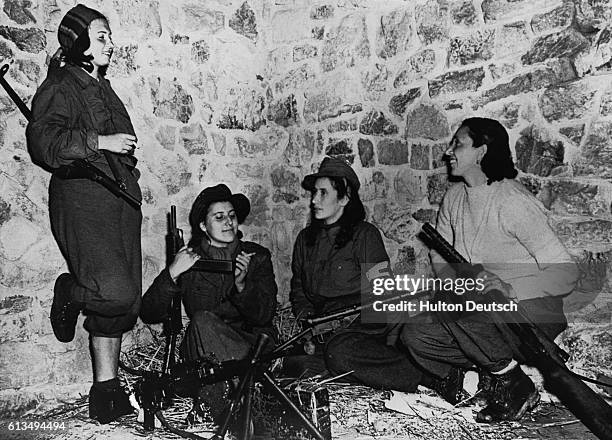
some of le femmine (the women)
Sources: Instagram Reel
Irma Bandiera

“First among Bolognese women to take up arms to fight in the name of liberty, she always fought with such courage. Captured while fighting the German SS, undergoing ferocious torture, yet she did not speak a word that would compromise her comrades. After she was blinded, she was cruelly slaughtered on the public road. The most pure heroine worthy of the virtues of Italian women, she would be a guiding light for all Bolognese patriots in the war of Liberation.”
(1915–1944) was a member of the seventh Gruppo di azione patriottica.
Tina Anselmi

during WW2 she risked her life currying messages this Ventio goddess it hard core
To those who insinuated that politics is not women’s business, she replied, “With what men knew we have had the war and fascism”.
In addition, in a Republic founded on a Constitution specifying an equality between the sexes, after 30 years the leadership of a ministry had still not been entrusted to a female representative. , in 1976, she made that a reality when she became the first “female minister”.
Health is the most important thing there is and should be equal for all”.
Photo from
Carla Capponi
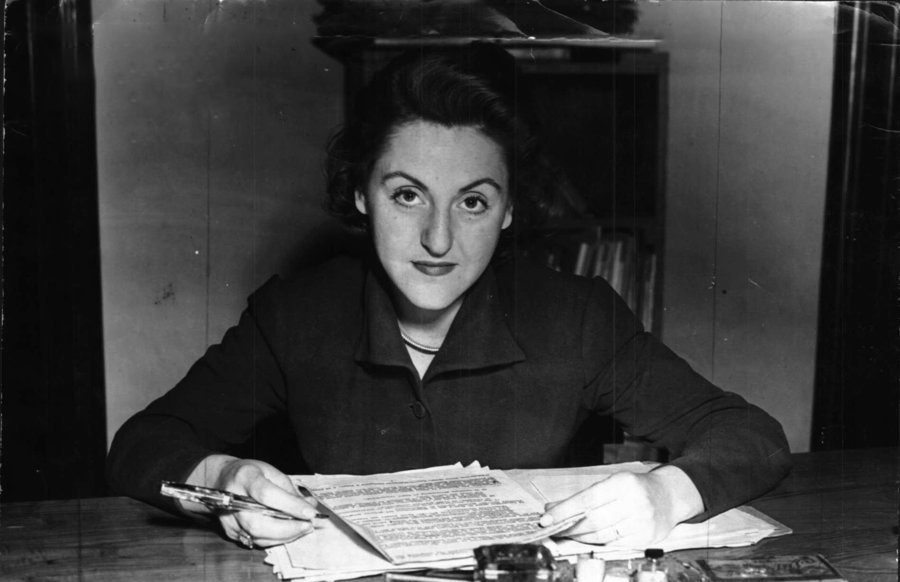
–There’s a podcast and photos the website is called the dead ladies show!
this articulates the struggle between wanting to be non violent when that’s not a choice
“It was a traumatic experience. I almost wanted to call to him, to make him turn around… but I knew he was armed. It seemed impossible that with my peaceful disposition, against any form of violence, I should hold the gun, point it at him and shoot him in the back. I took his briefcase. I was in shock… I began running down the street with the gun still in my hand… It was raining and tears were streaming down my face… After getting over the initial shock, especially since many of our comrades were being arrested and tortured, all our scruples were replaced by sheer determination to fight for our cause.”
Films
photos
https://www.gettyimages.ca/photos/world-war-ii-italy?page=3
Wiki overview of the events:
The date of April 25 was chosen as it was the day of the year 1945 when the National Liberation Committee of Upper Italy (CLNAI) – whose command was based in Milan and was chaired by Alfredo Pizzoni, Luigi Longo, Emilio Sereni, Sandro Pertini, and Leo Valiani (present among others the designated president Rodolfo Morandi, Giustino Arpesani [it], and Achille Marazza [it]) – proclaimed a general insurrection in all the territories still occupied by the Nazi-fascists, indicating to all the partisan forces active in Northern Italy that were part of the Volunteer Corps of Freedom to attack the Nazi and Fascist garrisons by imposing the surrender, days before the arrival of the Allied troops; at the same time, the National Liberation Committee for Northern Italy personally issued legislative decrees,[19] assuming power “in the name of the Italian people and as a delegate of the Italian Government”, establishing among other things the death sentence for all fascist hierarchs and other collaborationists of the Nazi occupiers,[20] including Benito Mussolini, who would be killed three days later. “Surrender or die!” was the rallying call of the partisans that day and those immediately following.
The war ends in Italy on 2 May 1945, with the complete surrender of German and RSI forces to the Allied forces, as formally established during the so-called Surrender at Caserta on 29 April 1945, marks the definitive defeat of Nazism and Fascism in Italy. By 1st May, all of northern Italy was liberated from occupation, including Bologna (21 April), Genoa (23 April), Milan (25 April), Turin[21] and Venice (28 April). The liberation put an end to two and a half years of German occupation, five years of war, and twenty-three years of fascist dictatorship. The aftermath of World War II left Italy bitter toward the monarchy for endorsing the Fascist regime for over 20-plus years. These frustrations contributed to a revival of the Italian republican movement.[22]
The liberation symbolically represents the beginning of the historical journey which led to the referendum of 2 June 1946, when Italians opted for the end of the monarchy and the creation of the Italian Republic. This was followed by the adoption of the 1948 Constitution of the Republic,[23] created by the Constituent Assembly and representatives from the anti-fascist forces that defeated the Nazis and the Fascists during the liberation of Italy and the Italian Civil War.[24]
sources:
https://en.wikipedia.org/wiki/Liberation_Day_(Italy)